
Shipping containers are known for their durability and versatility, but with the right organization strategy, they can also deliver maximum efficiency. Whether you’re using a container for a job site, workshop, retail inventory, or personal storage, smart organization makes all the difference. In this guide, we’ll share practical shipping container organization ideas to help you maximize every square foot while improving safety, accessibility, and productivity.
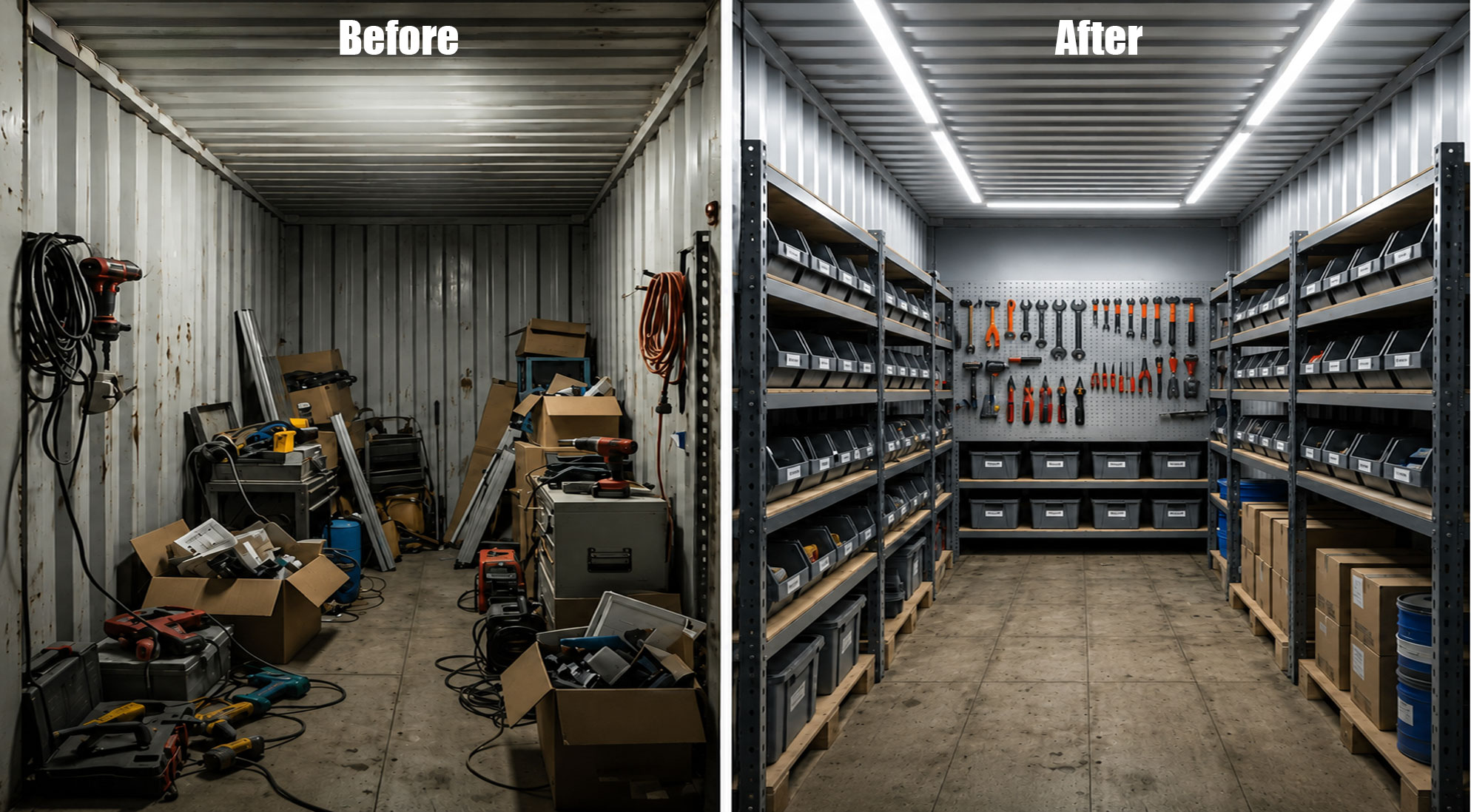
A well-planned shipping container can store more material, reduce retrieval time and support safer daily operations. Use these practical organization ideas to improve shelving, access, lighting, airflow and inventory control.
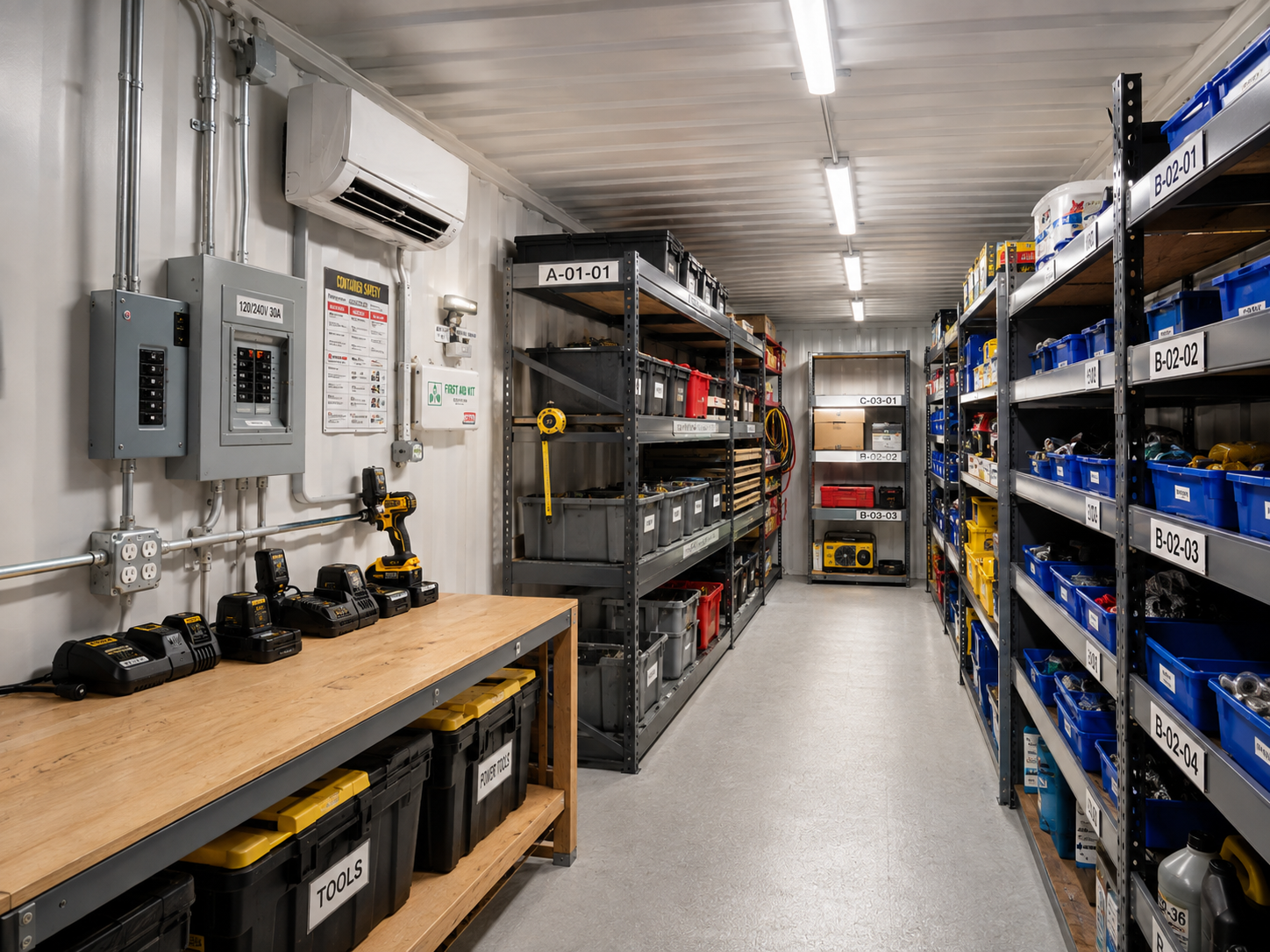
A planned layout with shelving, lighting and accessible pathway access turns a shipping container into an efficient storage space.
Why organization matters
1. Shelving Systems: Install heavy-duty shelves to keep items off the floor and create vertical storage. Great for tools, equipment, and inventory.
2. Wall-Mounted Storage: Use pegboards, hooks, and racks to hang tools, cables, and accessories. Keeps everything visible and within reach.
3. Stackable Bins & Containers: Use clear, labelled bins for small parts and supplies. Stack them to save space and stay organized.
4. Workbench Setups: Add a workbench for a dedicated workspace. Include drawers and cabinets for tools and supplies.
5. Overhead Storage: Utilize the upper space for items you don’t access daily. Perfect for seasonal or bulky items.
Start With Work Zones, Not Shelves
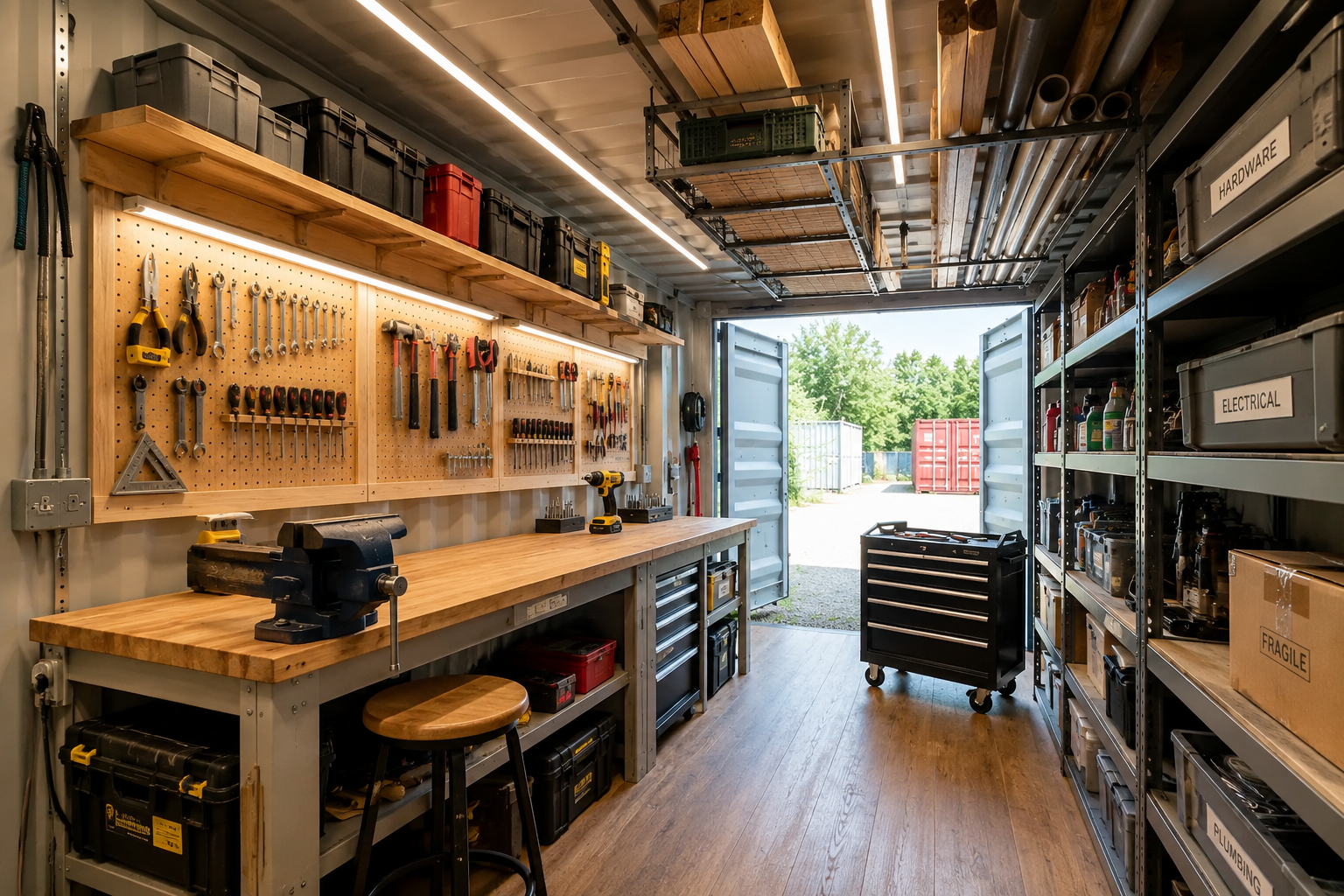
Before you buy shelves or load the first pallet, define how the container will support your operation. Divide the interior into functional zones based on workflow rather than product category alone.
✓ Fast-access zone: Keep frequently used tools, safety supplies and daily materials near the main doors.
✓ Bulk-storage zone: Place reserve inventory and less frequently used items deeper inside the container.
✓ Heavy-equipment zone: Keep dense materials on the floor or on lower rack levels to maintain stability.
✓ Small-parts zone: Use labelled bins, drawers or cabinets for fast identification and cycle counts.
✓ Work zone: Reserve an available space for packing, repairs, charging equipment or preparing orders.
Mark the zones on a simple floor plan before delivery or installation. This step helps you select shelf depth, passage width, door configuration and electrical requirements. It also prevents your team from filling open floor space with temporary piles that become permanent.
Use Vertical Space Before Expanding the Footprint
Most storage problems begin on the floor. Teams place boxes, tools and loose materials in rows, then stack new items in front of them. Upright Storage keeps the floor clear and makes each category visible.
Install shelving along one or both long walls and preserve a central access. A high cube container adds one foot of exterior height compared with a standard unit, which creates more room for upper shelving, long materials and low-frequency inventory. This extra vertical capacity can help a business increase storage without using more ground space.
Use upper levels for lightweight or infrequently accessed goods. Keep heavier items below waist height whenever possible. Secure tall racks so they remain stable during loading, seasonal ground movement and regular use.
Choose Shelving That Matches the Load
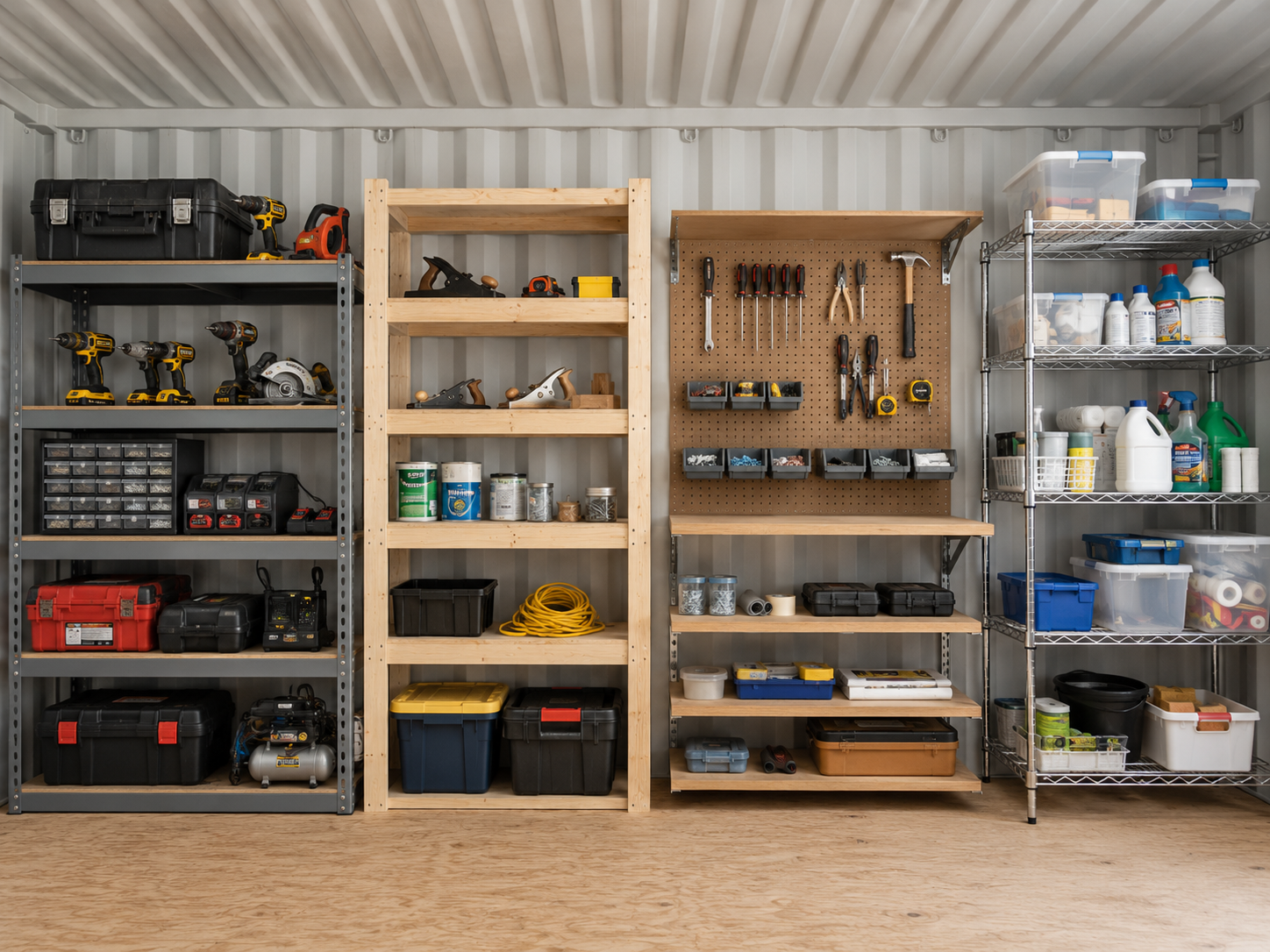
Every shelving system should match the weight, size and access frequency of the stored goods. A one-size-fits-all rack usually wastes space or creates unsafe loading conditions.
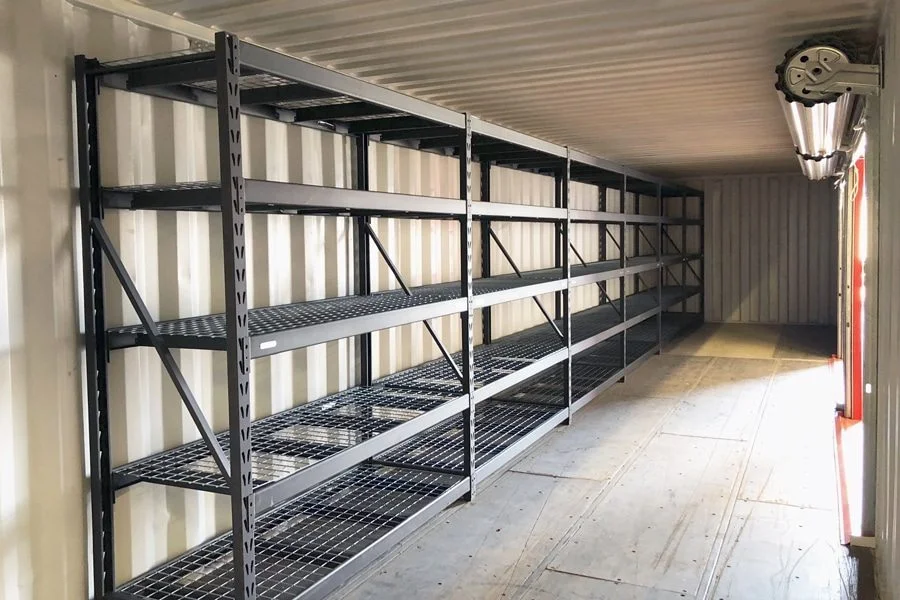
Industrial metal shelving
Metal shelving works well for construction storage containers, industrial parts, tools and packaged inventory. Choose adjustable shelves with stated load ratings. Place the heaviest material on the bottom levels and leave enough clearance to lift items without striking the ceiling.
Freestanding modular racks
Freestanding racks support rental containers and operations that change frequently. Your team can reposition the units when inventory volumes shift, and the system avoids permanent alterations to the container.
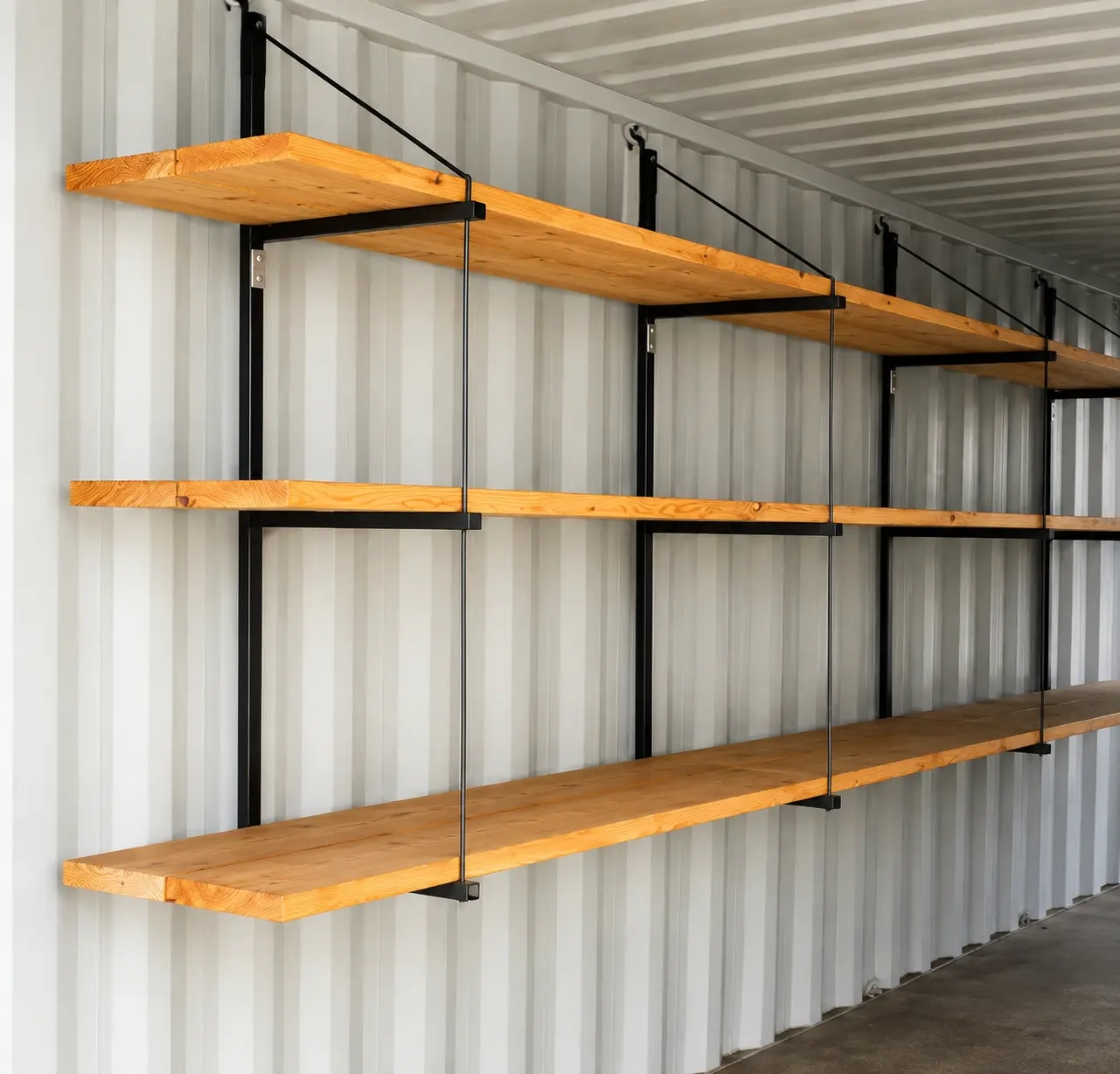
Container shelving kits
Purpose-built container shelving can use the container structure efficiently and preserve floor space. ATS Containers offers shelving and racking options for shipping and storage containers, including solutions for different load requirements.
Cabinets, drawers and secure cages
Lockable cabinets protect small tools, controlled supplies and higher-value parts. Drawer systems also reduce search time because each item receives a fixed location. Use internal cages when multiple crews share one container and require separate access.
DIY Wooden Shelving Ideas for Sea Cans
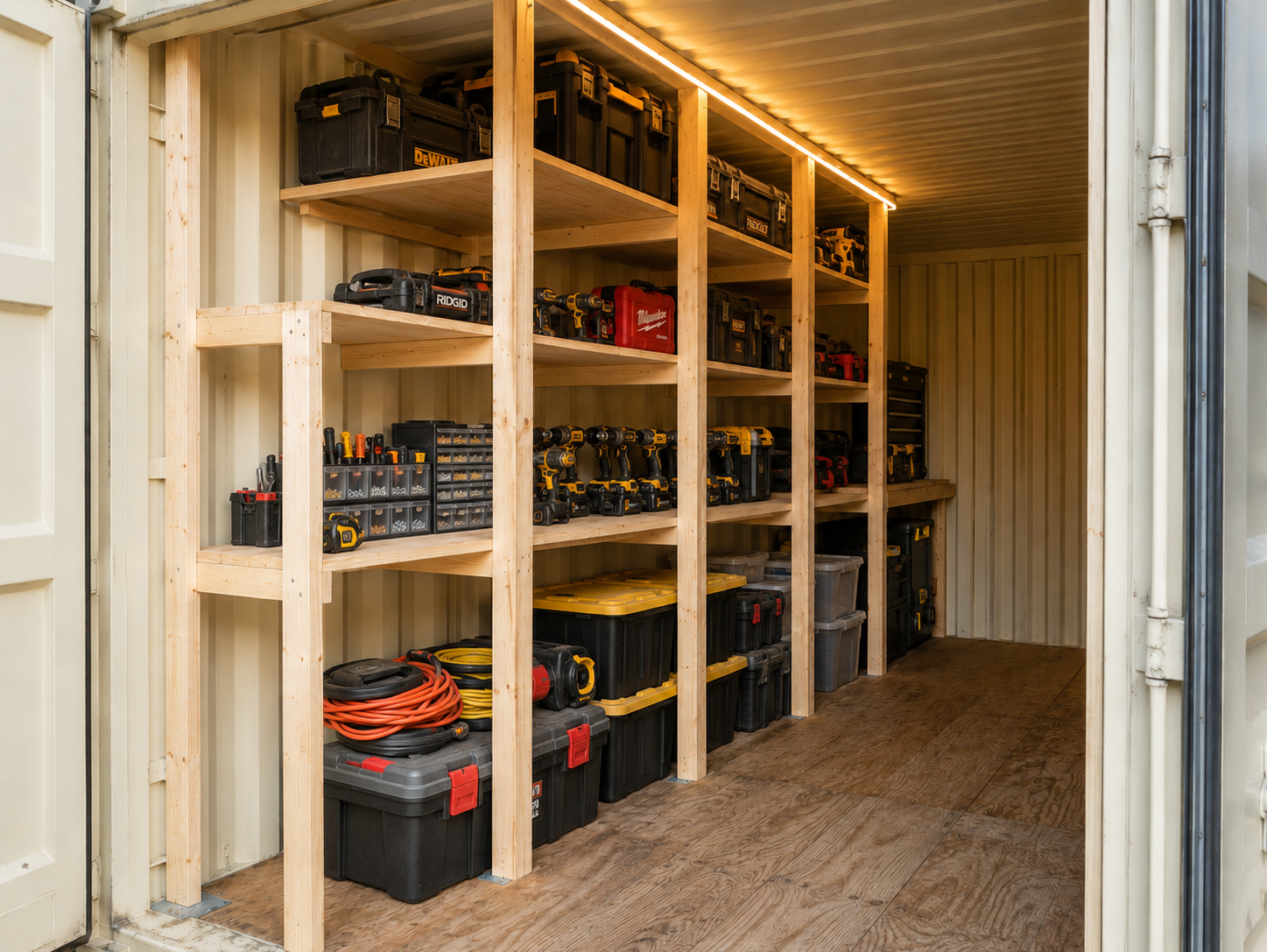
DIY wooden shelving is a cost-effective storage option for shipping containers, especially when organizing lighter materials such as household goods, sports gear, and seasonal supplies.
Many container owners choose to build shelves with 2×4 lumber and plywood because this setup is simple, practical, and easy to customize. It allows you to adjust the shelf width, height, and depth based on the items you need to store.
Custom Racking for Specific Storage Needs
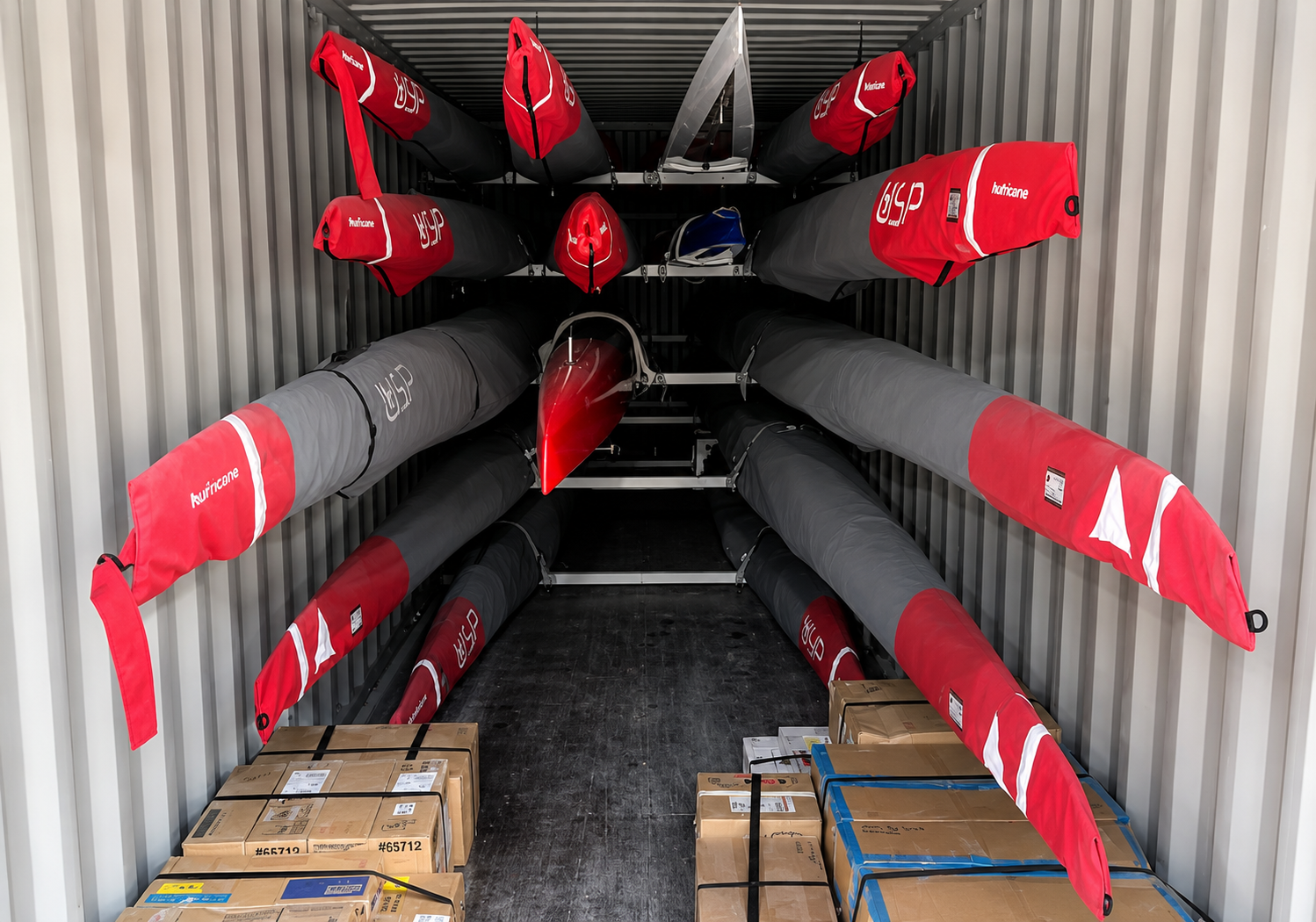
Custom shelving and racking can be designed around the specific needs of your business. For example, a 20 FT shipping container can be fitted with custom racks to store kayaks safely and efficiently, helping maximize vertical space, keep equipment organized, and maintain a clear central access area.
Create a Clear Aisle and Retrieval Path
A container stores more when your team can reach every item without unloading half of the unit. Keep a continuous aisle from the doors to the back wall. Avoid placing loose material inside the door swing area or directly in front of shelves.
Use an access-frequency rule: place daily items closest to the entrance, weekly items in the middle and reserve stock at the rear or on upper shelves. This simple approach reduces handling time and helps new employees understand the layout quickly.
For palletized inventory, confirm turning space and equipment clearance before loading. A ramp can improve access for dollies and hand trucks, while a level placement surface helps doors, shelving and wheeled equipment function properly.
Standardize Labels and Inventory Locations
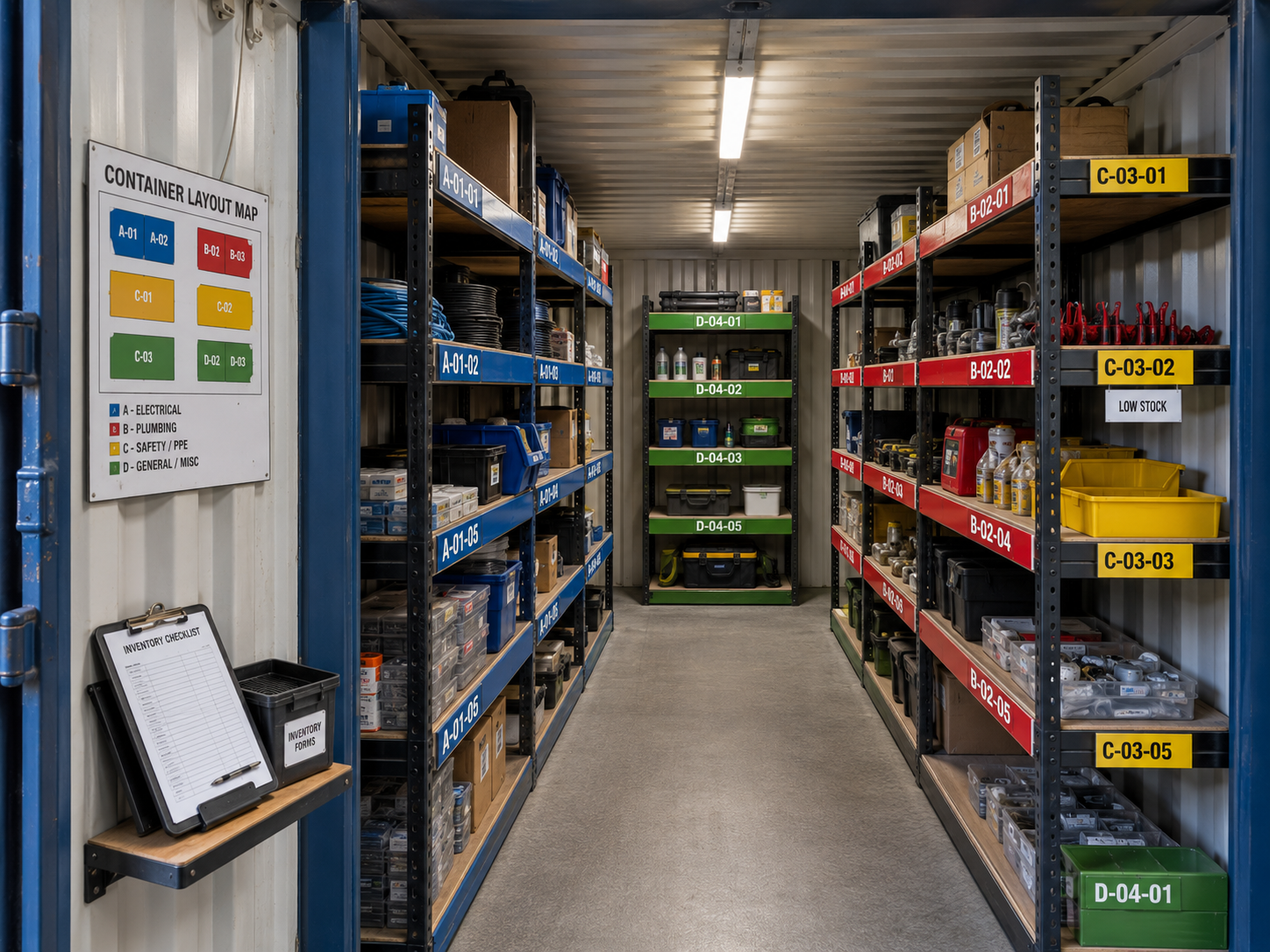
Labels turn an organized interior into a repeatable operating system. Assign each rack, shelf and bin a location code such as A-01-03. Record that code in your inventory list, maintenance system or jobsite materials log.
✓ Use large, weather-resistant labels that remain readable in low light.
✓ Apply the same naming system across every ATS container on the site.
✓ Add colour coding for trades, departments, projects or hazard classes.
✓ Place a printed layout map near the entrance.
✓ Schedule regular audits to remove obsolete stock and correct misplaced items.
✓ Easy-to-read labels also improve replenishment. Staff can identify empty locations, count stock and report shortages without opening every box.
Build a Compact Workshop Inside the Container
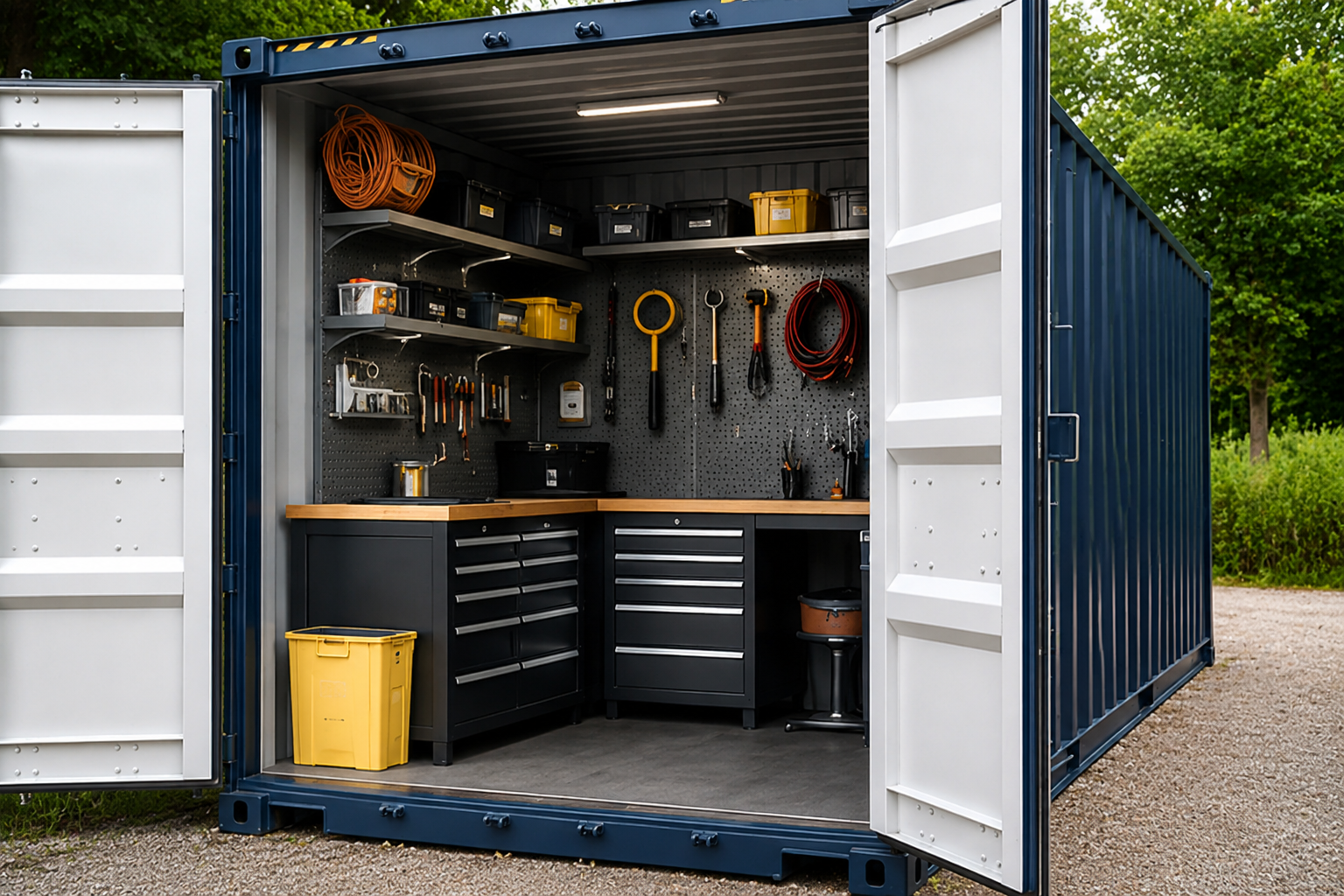
Modified shipping containers can combine secure storage with a practical work area. Install a workbench along one wall and use the space below it for cabinets, drawers or mobile tool chests.
A pegboard or slotted tool panel keeps hand tools visible and within reach. Magnetic strips, hooks and dedicated holders work well for frequently used items. Keep the central passageway open so the workspace supports both storage and movement.
Mount long materials such as conduit, lumber, pipe or trim on approved overhead or wall-mounted supports. Design the rack around the longest item and make sure the supports connect to suitable structural points. Avoid overloading thin corrugated wall panels.
Wall-Mounted and Hanging Storage Solutions for Shipping Containers
Wall-mounted storage is an effective way to increase capacity inside a shipping container while keeping the floor unobstructed and functional.
One of the main advantages is that it uses the container’s upright space. By installing shelves, racks, or hanging systems along the walls, you can store more items without reducing the main walkway or work area.
It also helps promote better airflow. Keeping products, tools, or supplies off the floor can reduce moisture-related issues and support better ventilation throughout the container.
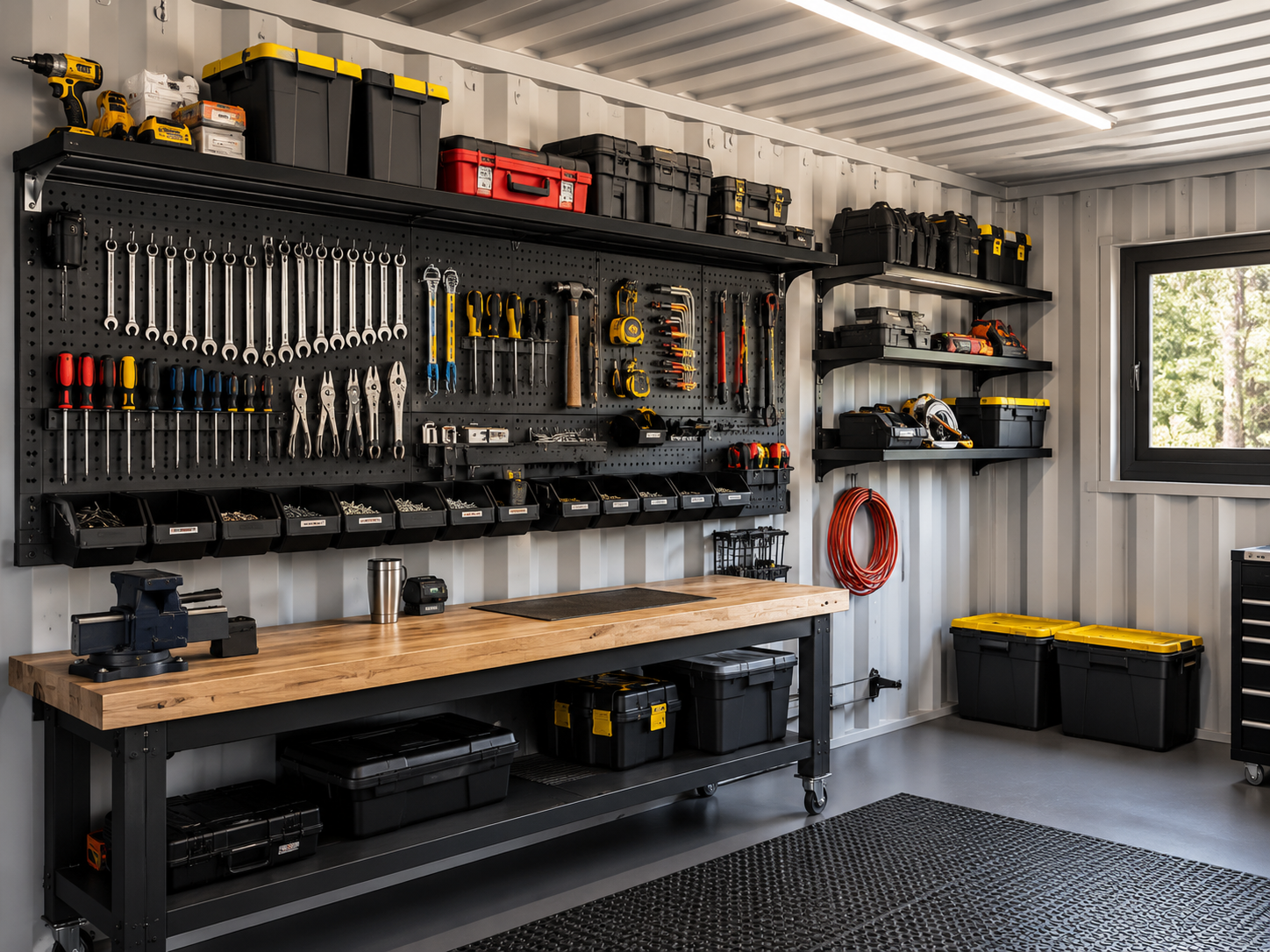
The best mounting points are the vertical posts and horizontal support members, since these areas are designed to handle weight. They can support practical solutions such as pegboards with backing panels, hanging rails, magnetic tool holders, or lightweight wall shelving.
Improve Access With Side Doors or Roll-Up Doors
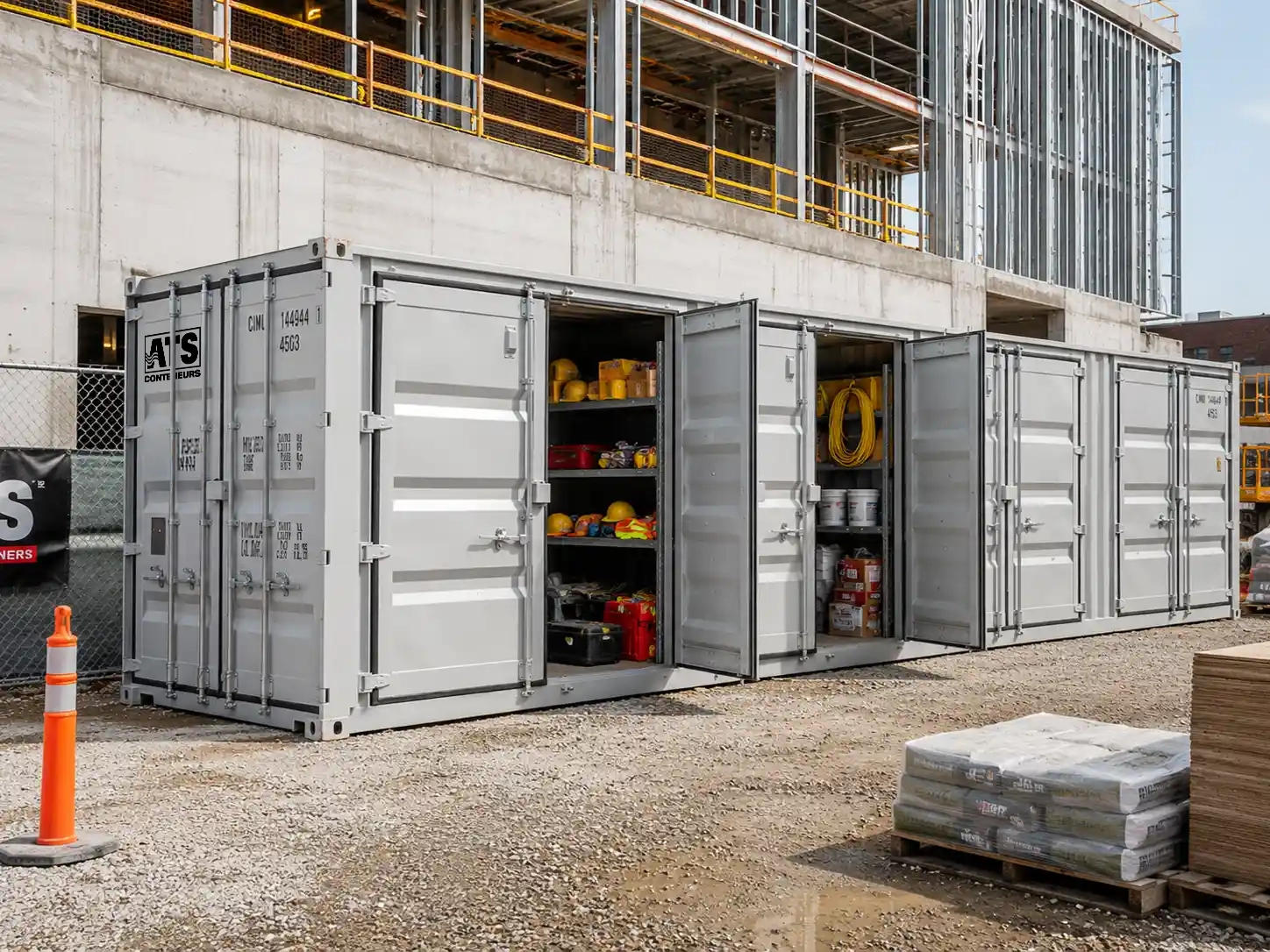
End doors work well for general storage, but operations with many product categories may benefit from additional access points. A side door shipping container lets staff reach different sections without moving the contents stored in front.
A shipping container roll up door can create a dedicated access bay for tools, inventory or equipment. Multiple roll-up doors can divide a container into operational zones, support separate crews and reduce retrieval time. Original equipment manufacturer side doors can also provide wide openings for bulky materials and organized compartment access.
Choose the door layout before finalizing the shelving plan. Shelves, partitions and work surfaces must preserve clear door openings and safe movement.
Add Lighting and Electrical Capacity
Good lighting improves safety, accuracy and productivity. A dark container forces employees to use handheld lights and makes labels difficult to read. Install evenly spaced LED fixtures that illuminate shelves and the work surface.
A shipping container electrical package can add interior lighting, outlets, heating, air conditioning and equipment connections. Plan outlet locations around charging stations, workbenches and powered tools. Use qualified professionals and applicable Canadian electrical requirements for permanent installations.
For temporary or low-use storage, battery-powered or solar lighting may provide a practical alternative. Motion-activated lighting can also reduce energy use and support quick access.
Control Moisture and Temperature in Canadian Conditions
Canadian weather can expose a container to rapid temperature changes, wet equipment, snow and seasonal humidity. Moisture can collect on cold steel surfaces when warm, humid air cools inside the unit. An organization plan should support airflow and keep sensitive goods away from direct contact with exterior walls.
✓ Keep cardboard, textiles and sensitive inventory on shelves or pallets.
✓ Leave small air gaps around stored goods so air can circulate.
✓ Avoid packing material tightly against vents.
✓ Dry wet tools and equipment before long-term storage.
✓ Use ventilation, insulation or climate control when the contents require it.
ATS ventilation options increase airflow and help reduce humidity, condensation and mould. Shipping container insulation can also improve temperature control for offices, workshops and sensitive storage applications. Select the solution based on the stored materials, location, access frequency and operating season.
Protect High-Value Inventory
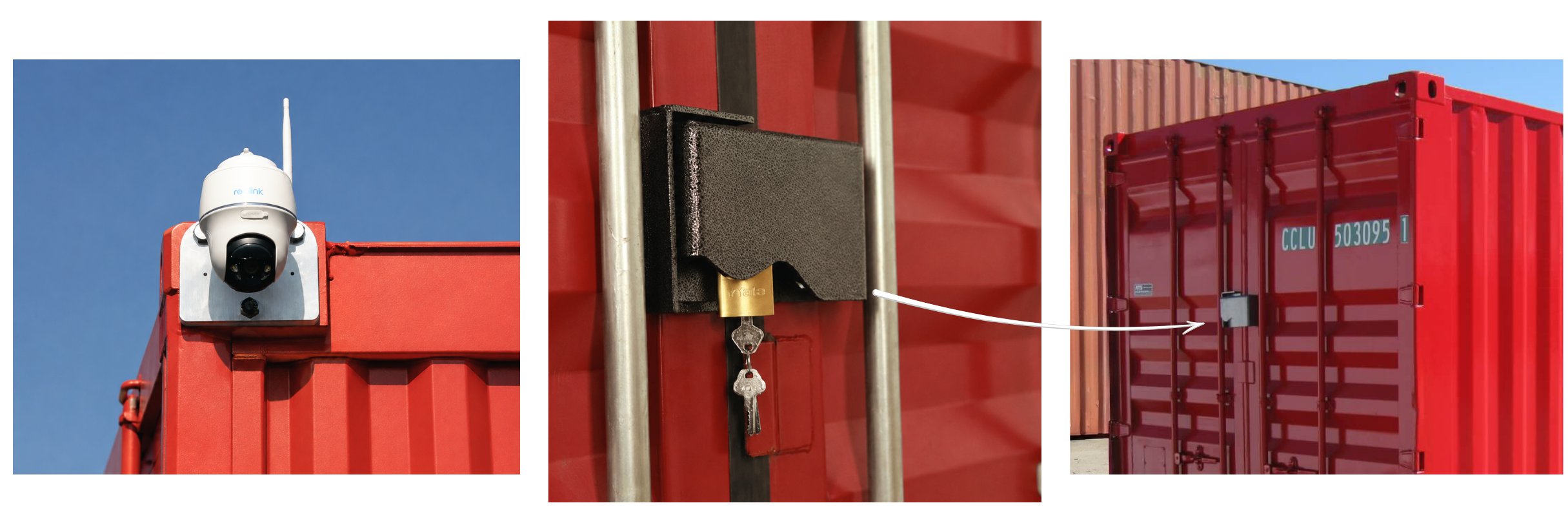
Organization and security should work together. Keep high-value items in lockable cabinets or cages and position them away from immediate door access. Use a secure container lock, protect the locking area with a lockbox and maintain a current inventory list.
Good housekeeping also supports security. A clean aisle and fixed item locations make missing equipment easier to identify. Add controlled key access, lighting, alarms or cameras when the value and risk profile justify them.
Avoid These Common Organization Mistakes
- Loading first and planning later: Create the layout before materials arrive.
- Using shelves without load ratings: Match every rack to the expected weight.
- Blocking doors or vents: Preserve door swing, access and airflow.
- Stacking mixed items without labels: Give every category a fixed location.
- Storing goods overhead: Keep dense loads low and stable.
- Ignoring future growth: Leave flexible rack space for changing inventory.
- Creating a narrow aisle: Plan for employees, carts and the largest item that must move through the container.
Make the Most of Your Shipping Container
A well-organized shipping container can provide more usable storage, easier access, and a safer, more efficient workspace. By planning your layout, using vertical space, and choosing the right shelving, access points, and accessories, you can adapt your container to the way your business actually operates.
ATS Containers offers new, used, rental, and modified shipping containers with storage accessories and customization options to help you build a solution that fits your needs. Contact our team to discuss your project or request a quote.
