Rent a
Shipping Container
Pop-Up Kiosk
A container kiosk brings your retail space directly to your customers at festivals, markets, or mall parking lots.
Our 20 ft rental kiosks arrive ready for operation with an integrated electrical power port and a clean, neutral exterior for your temporary event signage. Built for security, the heavy-duty steel unit locks up completely solid at closing time. Rent with ATS for a short-term event, a full season, or buy it to keep.

What Is a Shipping Container Kiosk?
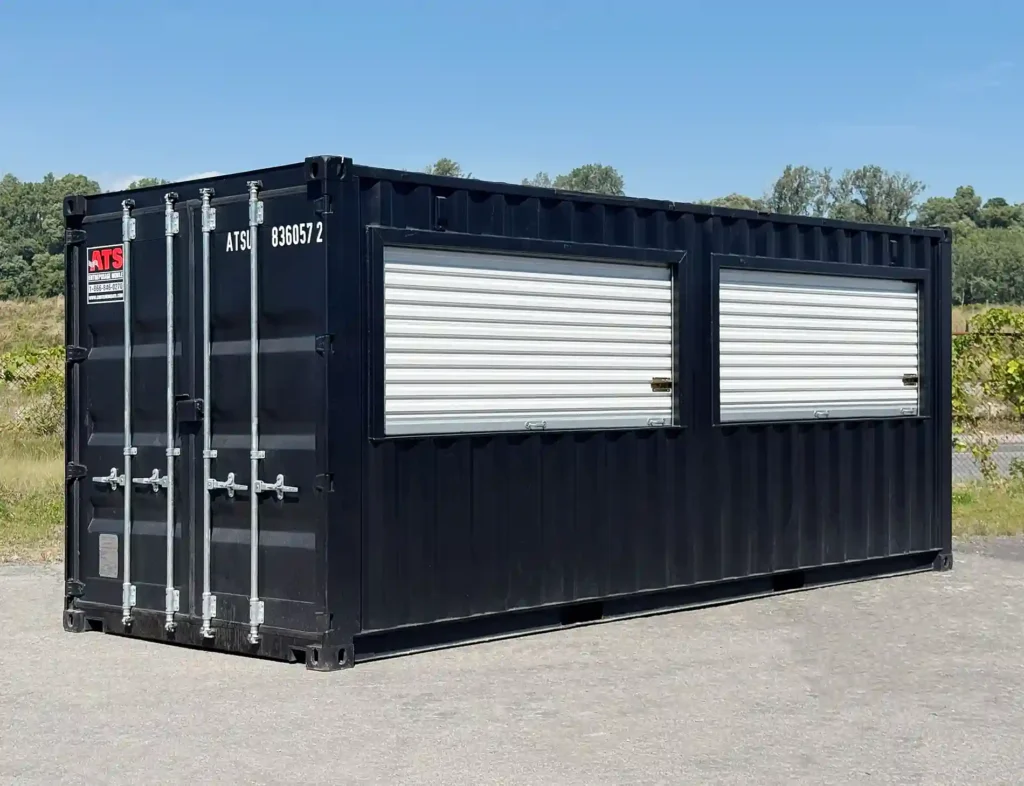
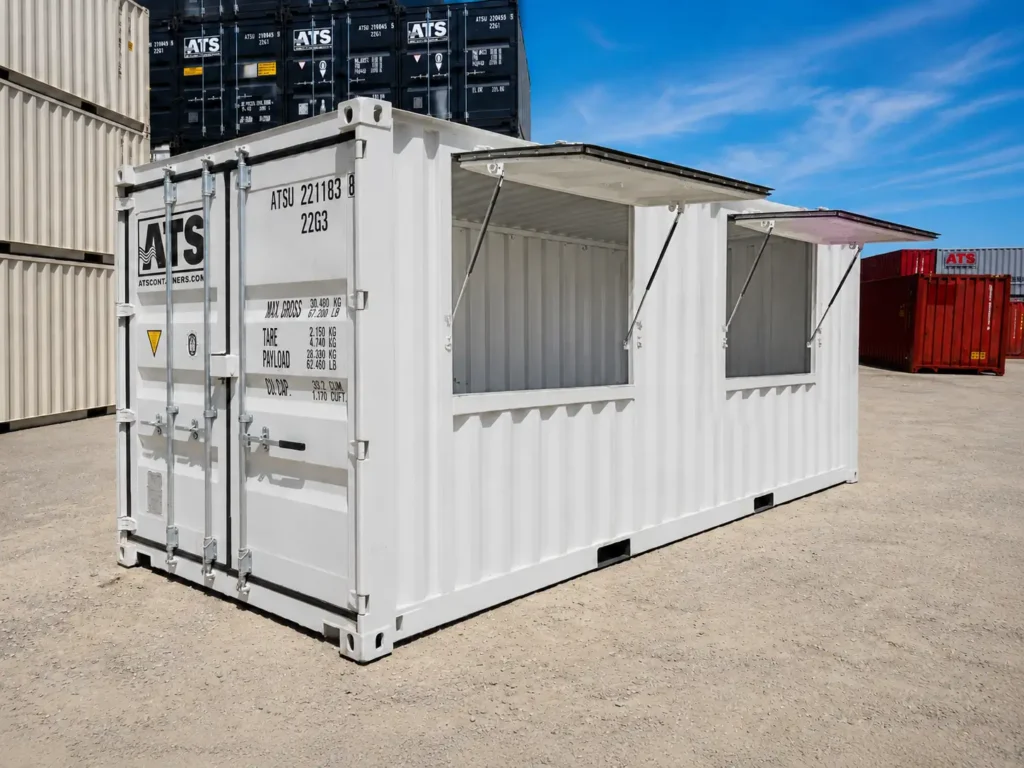
A shipping container kiosk is a modified steel container fitted out as a self-contained retail, food service or information space. It ships as one piece, drops on almost any flat surface, opens for business through a serving window or roll-up shutter, and closes into a locked steel box overnight.
Why Businesses Choose a Container Kiosk
No lease, no build-out: You’re not signing five years on a unit and paying to renovate it. You rent the kiosk for as long as you need the space.
It goes where the traffic is: Festivals, stadiums, campuses, transit hubs, mall lots, construction hoardings, mixed-use developments. Anywhere you can park a truck, you can open a store.
Security is built in: Steel walls, steel shutters, a real lock. Leave stock in it overnight.
The kiosk is a brand asset: Our 20 ft rental fleet features a clean, neutral exterior that acts as a professional blank canvas. This allows you to easily hang your own temporary event banners and signage.
20ft Kiosk Applications and Uses
| Application Type | Footprint | How the 20ft Model Delivers |
|---|---|---|
| Food & Beverage | ~148 sq ft | Operates as a full container restaurant, bar, coffee service, or high-volume concession stand. |
| Retail & Merchandise | ~148 sq ft | Functions as a flagship pop-up, multi-brand retail space, or single-product vendor stand. |
| Events & Services | ~148 sq ft | Serves as a ticket booth, information kiosk, VIP event space, or brand activation hub. |
The 20ft kiosk is the ultimate all-in-one solution and our exclusive model available for rent. Offering ~148 sq ft of adaptable space, it provides a real service counter and plenty of room for equipment and staff, while remaining compact enough to fit perfectly inside a standard parking space. Whether you need a temporary ticket booth or a full container bar, this single footprint handles it all.
Features We Build Into Container Kiosks
Openings and access
- Two serving windows
- Gas-strut lift panels (awning style) or Lockable roll-up shutters
- Ground-level entry, so no ramp or steps needed
Interior
- Serving counters and prep surfaces
- Integrated power port
- Shelving, display racking and storage (add-on)
Exterior and branding
- Neutral paint finish
- Ready for your personal branding
- Accommodates temporary banners and signage
What People Use Container Kiosks For
- Food and beverage: concession stands, coffee bars, food kiosks, bakeries, ice cream and specialty vendors
- Bars and taprooms: container bars for festivals, beer gardens, patios and stadium concourses
- Retail pop-ups: seasonal storefronts, holiday markets, brand activations, DTC brands testing physical retail
- Events and festivals: merchandise booths, ticketing, will-call, sponsor activations
- Sports and venues: concourse concessions, team stores, gate ticketing
- Campus and municipal: information booths, service kiosks, seasonal programming
- Developments: sales centres and amenity kiosks on mixed-use sites
Container villages like Toronto’s Stackt put the format in front of a lot of Canadians. What used to read as a stopgap now reads as a destination.
Rent or Buy a Container Kiosk
Rent when the use is seasonal, tied to an event calendar, or you’re testing a concept before committing. You get the finished kiosk, we handle delivery, placement and pickup, and the unit goes back at the end of the term.
Buy when the kiosk becomes part of how you operate: a permanent second location, a repeating festival circuit, a fleet you’ll brand and redeploy year after year.
Talk to a specialist and we’ll help you plan and choose based on what works best for you.
Permits, Placement and Lead Time
A container kiosk sits on gravel, asphalt or concrete. It needs a firm, level pad, truck access for delivery, and a power source if you’re not running a generator.
Permitting depends on your location and what you are selling, which may include municipal zoning, temporary structure permits, or health authority approvals for food service. While private sites and event grounds are typically straightforward, we recommend verifying all specific permit requirements directly with your local municipality.
Plan ahead for peak season: Our 20 ft rental kiosks are highly sought after for summer festivals and events. To ensure seamless planning and guarantee your preferred delivery schedule, we recommend reserving your unit well in advance of your event date.
Container Kiosk FAQs
Can you turn a shipping container into a shop?
What size container works best for a pop-up kiosk?
How much does a shipping container kiosk cost to rent?
Can I put my branding on a rented kiosk?
Do I need a permit for a shipping container kiosk?
How long does it take to get a container kiosk?
Can a container kiosk be used year-round in Canada?
Have a question?
Call a container specialist.
