
Building with Shipping Containers: Common Mistakes to Avoid
At ATS Containers, we see more and more creative projects designed using shipping containers. Our clients regularly share their achievements with us: pop-up shops, container homes, container pools, temporary markets, and much more. But beyond the inspiration, many also share the challenges they encountered along the way. To help you succeed in your own project building with shipping containers, here are the most frequent mistakes to avoid.
1. Underestimating the Real Cost of a Container Structure
Contrary to popular belief, building a habitable structure from containers is not always cheaper than using traditional materials. You must plan for significant costs related to:
- Container modifications.
- The addition of suitable thermal insulation.
- Electrical installations and plumbing.
For sustainable projects like a container house, a garage, or a residential building, keep realistic expectations regarding your global budget.
2. Ignoring Municipal Bylaws and Permits
Many people wrongly believe that a shipping container can be installed without a permit. However, in the majority of Canadian cities, a building permit is required as soon as the container is used as a fixed or habitable structure. Before buying or installing, check with your municipality regarding:
- Zoning restrictions
- Compliance with the National Building Code of Canada, which sets the safety standards for all construction.
- Safety and fire standards
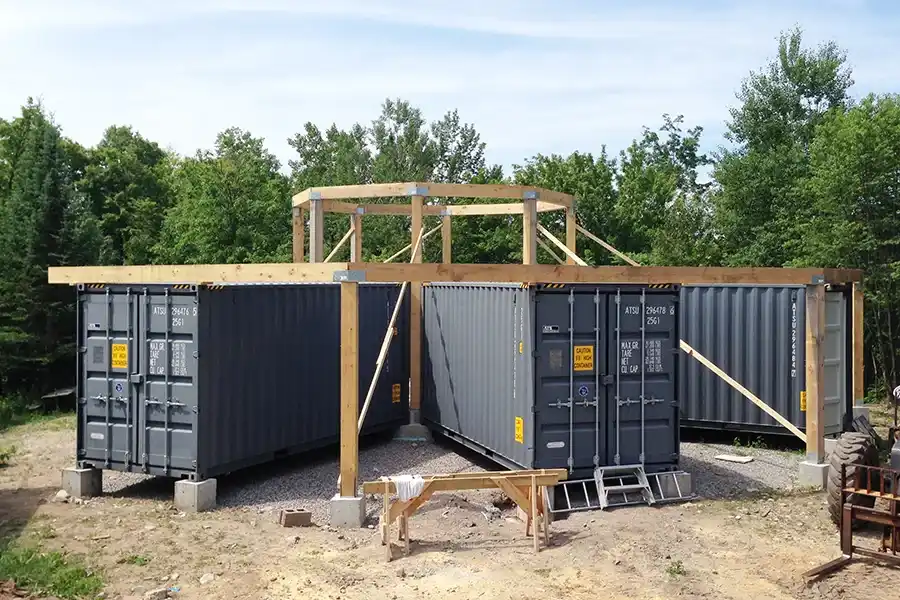
3. Neglecting the Foundation
A solid base is essential. A poor foundation can compromise the structure, especially with factors like the frost-thaw cycle, rain, or ground movement.
We strongly recommend:
- A concrete foundation.
- Hiring a qualified contractor.
- Site preparation tailored to your specific location.
Consult our complete guide on shipping container foundations on our website for more details.
4. Choosing the Wrong Type of Container
Should you use a new or used container?
- For temporary or non-habitable projects: A used container may be sufficient.
- For alternative housing, a container pool, or a permanent structure: Opt for a new container in excellent structural condition.
5. Poor Planning for Insulation and Interior Layout
A raw container is not naturally comfortable. For use in all seasons, you must:
- Add high-performance thermal insulation (e.g., closed-cell spray foam).
- Take the R-value into account based on your region.
- Plan for a heating and cooling system.
Proper insulation ensures better interior comfort and reduces your long-term energy costs.
In Summary
Building with shipping containers is an original approach, but it requires rigor, planning, and professional guidance. Whether you want a container home, a modular building, or a temporary installation, our team can guide you toward the right decisions.
Do you have a project or an achievement to share?
Send us your photos or testimonials at info@atscontainers.com. We love seeing what you build!
