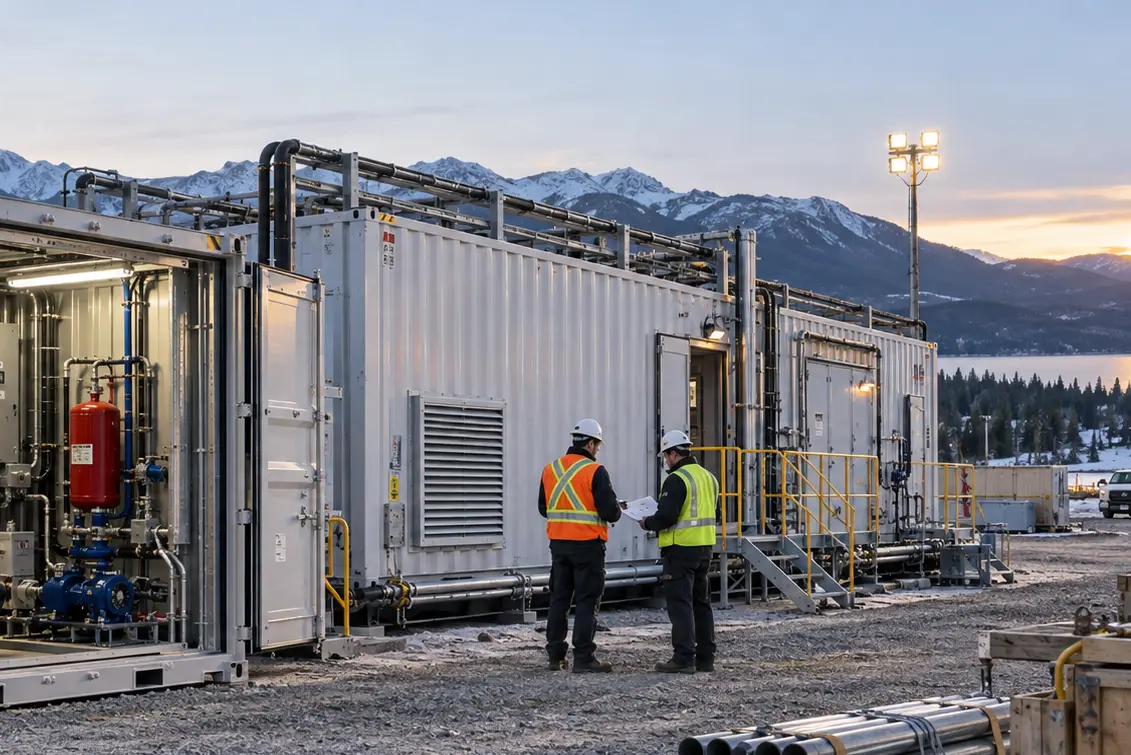
On a remote job site, at an industrial facility, or within an energy project, a shipping container can serve a much broader purpose than storage. In the hands of specialized teams, its steel structure becomes a technical platform capable of housing complex electrical, mechanical, petroleum, or energy systems.
This is exactly the approach used by Groupe SM Tardif, a long-standing ATS Containers customer.
Since 1979, this Quebec family-owned company has developed solutions for the construction, manufacturing, and engineering sectors. Geneviève Tardif now leads a group of approximately 280 employees that delivers projects across Quebec, including communities and industrial sites in Canada’s Far North.
For many of these projects, Groupe SM Tardif uses 20 ft and 40 ft shipping containers, mainly High Cube models supplied by ATS Containers, as the starting structure for specialized technical units.
Integrated Expertise in Construction, Energy, Mechanical Systems, and Steel Fabrication
One of Groupe SM Tardif’s key strengths comes from the complementary expertise of its different companies.
SM Construction delivers a wide range of projects, including commercial and industrial buildings, petroleum depots, service stations, modular buildings, and technical installations.
Pagui provides expertise in electrical work, plumbing, telecommunications, piping prefabrication, energy efficiency, and energy-related solutions.
Tardif Métal specializes in the design and fabrication of steel structures, electrical structures, telecommunications towers, miscellaneous metals, and specialized equipment.
This combination allows the group to take a standard shipping container and integrate a solution designed for a very specific need.
Why Use a Shipping Container for an Industrial Project?
For Groupe SM Tardif, the main advantage of a container goes beyond its format. Its structure provides a standardized, durable, transportable base that works well with a factory prefabrication approach.
This becomes particularly important when a company needs to ship a complete installation to Northern Quebec or to a hard-to-access site.
Teams can complete much of the mechanical assembly, electrical work, instrumentation, insulation, and testing before shipment. This reduces the amount of work required directly on site.
For some remote projects, this prefabrication strategy can reduce field work time by 30% to 50%.
In the Far North, every hour on site matters. Teams must work within short construction windows, extreme temperatures, complex logistics, and limited access to resources.
Preparing the installation in a controlled southern environment can therefore simplify commissioning once the equipment reaches its destination.
Technical Containers Designed for Far North Conditions
Mequillon Mine: A Diesel Pumping Station Inside a 40 ft Container
At Canadian Royalties’ Méquillon Mine, Groupe SM Tardif used a 40 ft shipping container to create an automated emergency diesel pumping station.
The module protects mechanical components and control systems while making it easier to transport the complete installation to a remote mining environment.
Puvirnituq: A Mobile Electrical Container for Hydro-Québec
In Puvirnituq, Nunavik, the group used a different approach.
A mobile electrical container provides a safe connection between the electrical grid and a generator for a Hydro-Québec camp.
In this type of application, the container becomes a prefabricated electrical shelter. It protects sensitive components while consolidating several systems within one transportable enclosure.
How Can a Container Operate at -50°C?
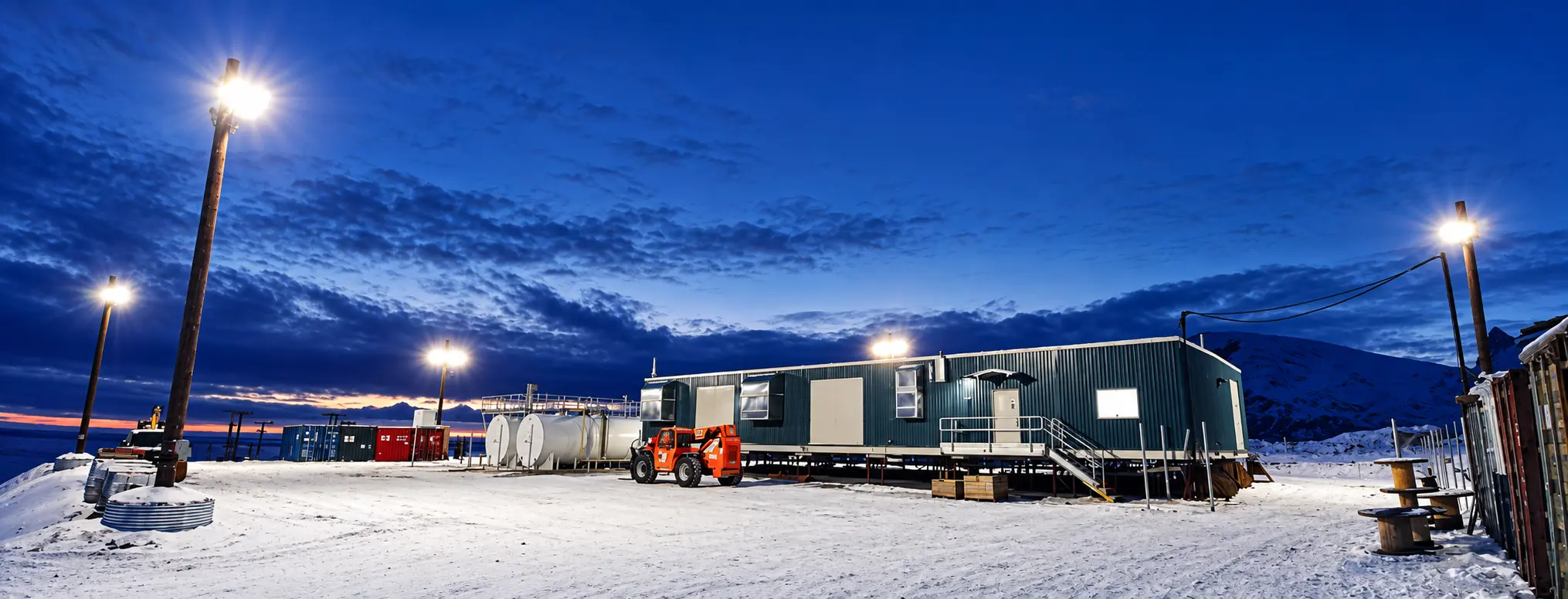
Choosing the container is only the starting point. Groupe SM Tardif then adapts each unit to the operating conditions of the project.
For some northern projects, teams add 3 inches of spray polyurethane foam insulation and an industrial HVAC system. These systems can maintain an interior temperature of approximately +10°C to +15°C even when the outdoor temperature drops to -50°C.
This allows teams to protect pumps, electrical panels, controllers, piping, and other sensitive equipment from extreme weather conditions.
The insulated enclosure also creates a more suitable environment for inspections, maintenance, and technical work.
Shipping Containers Modified to Meet Project Requirements
Industrial applications often require much more than a simple opening or an added door.
Depending on the project, Groupe SM Tardif can integrate structural cut-outs, steel reinforcement, skid-type frames, and monorails to support, move, or lift heavy equipment.
Teams can also divide the interior into separate electrical, mechanical, or petroleum zones.
Sealed partitions or fire-rated assemblies can help meet the project’s technical and safety requirements.
Control systems may also include wiring, fibre optics, SCADA interfaces, gas detectors, and automated fire detection systems.
The container therefore becomes the physical enclosure for a much more complex industrial system.
Can a Shipping Container Be Used for a BESS System?
Yes. Growing electrification needs are creating new applications for containerized infrastructure.
Groupe SM Tardif uses 40 ft containers for mobile power units and BESS projects, also known as battery energy storage systems.
In projects serving electric bus fleets in Saint-Basile-le-Grand and Saint-Jérôme, these solutions help manage charging-related power requirements.
Peak shaving can help control demand peaks when several vehicles require a large amount of electricity at the same time.
A prefabricated Plug & Play approach also allows teams to assemble and test the main systems before they arrive on site.
This strategy can provide an important advantage when grid connection delays slow down an electrification project.
Ten Containers Used to Create a Firefighter Training Centre
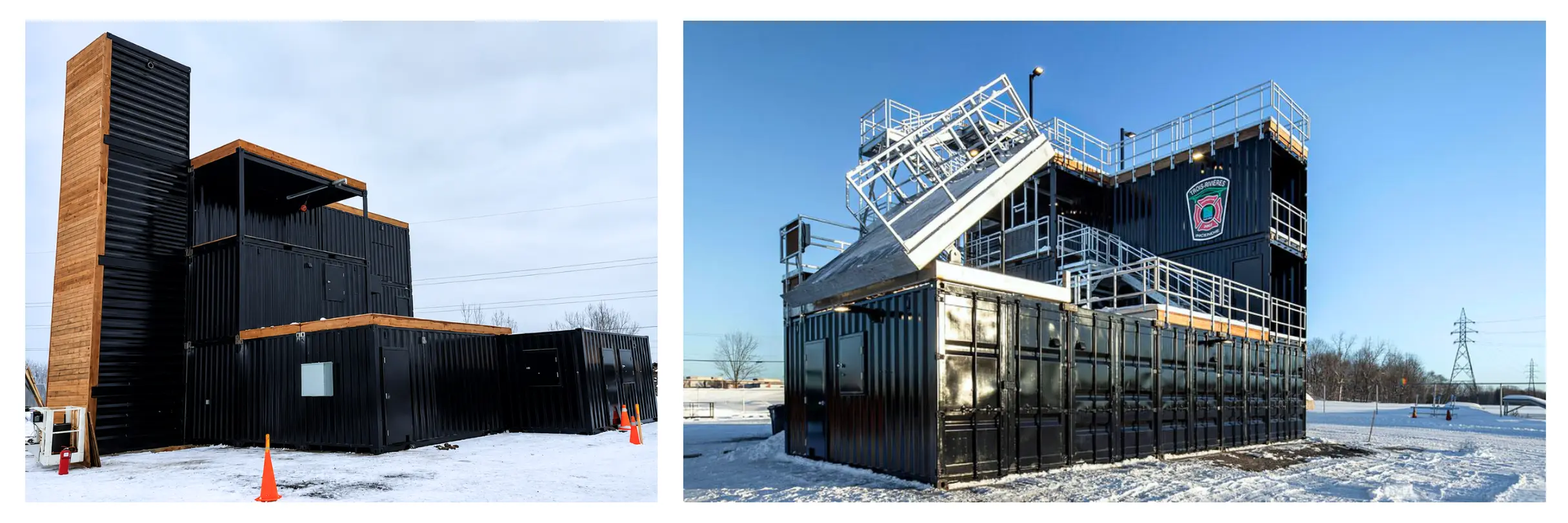
Groupe SM Tardif’s projects also show that shipping containers are not limited to mining and energy applications.
In Trois-Rivières, teams used 10 shipping containers to build a modular firefighter training centre.
The configuration allows fire departments to practise different manoeuvres and create emergency response scenarios in a controlled environment.
This project also illustrates the complementary expertise within the group. SM Construction worked on the container modifications, Pagui handled the electrical components, and Tardif Métal contributed to the steel structures and miscellaneous metal work.
The result shows how multiple containers can form a complex training facility rather than a simple enclosed space.
Two Stacked Containers for Vanier College in Montreal
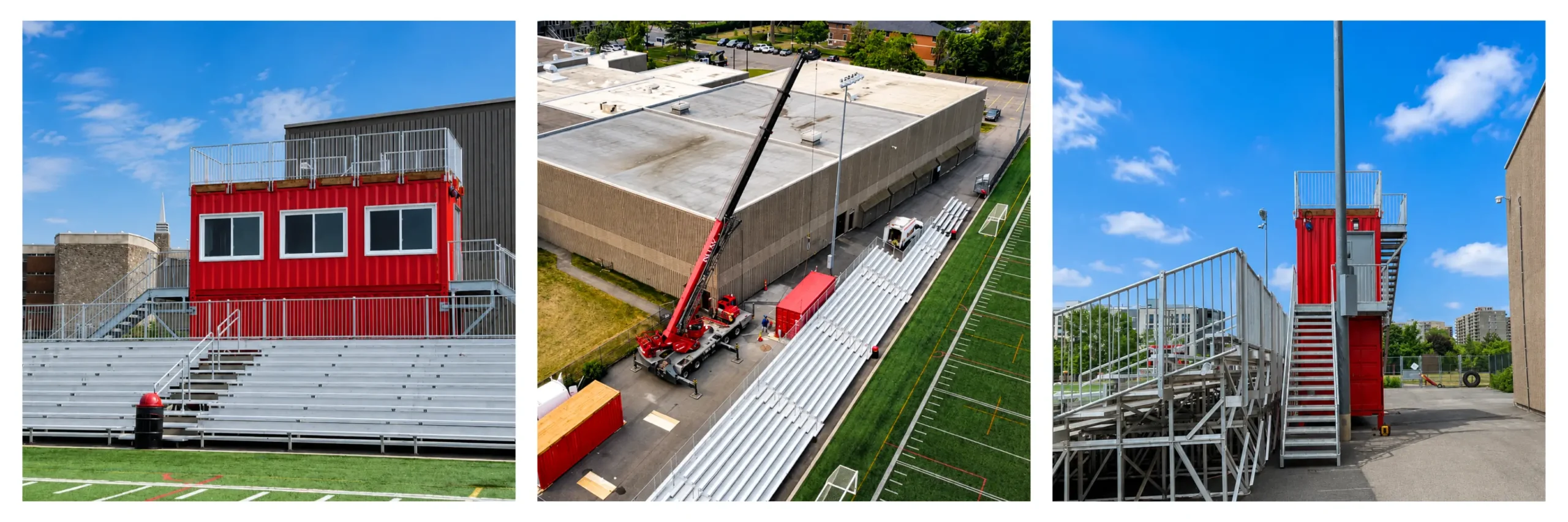
At Vanier College in Montreal’s Saint-Laurent borough, Groupe SM Tardif used two stacked containers to meet a completely different need.
The installation combines a sports press box, an area for media capture activities, and a secure storage zone.
Stacking the containers makes better use of vertical space and limits the building’s footprint on site.
This example clearly shows the versatility of containerized structures. The same platform can support an industrial project in Nunavik and then serve as a functional building in a school and sports environment in Montreal.
Containers for Petroleum Depots in Northern Quebec
Groupe SM Tardif also has extensive expertise in petroleum infrastructure.
At several depots in Northern Quebec, teams use modified containers to protect pumps, control components, and loading equipment.
The steel shell creates a durable enclosure that protects equipment from wind, snow, abrasive dust, and the demanding conditions associated with transportation.
This approach also makes it easier to consolidate several systems inside a single unit before shipment to the job site.
Petroleum Facility Renovations
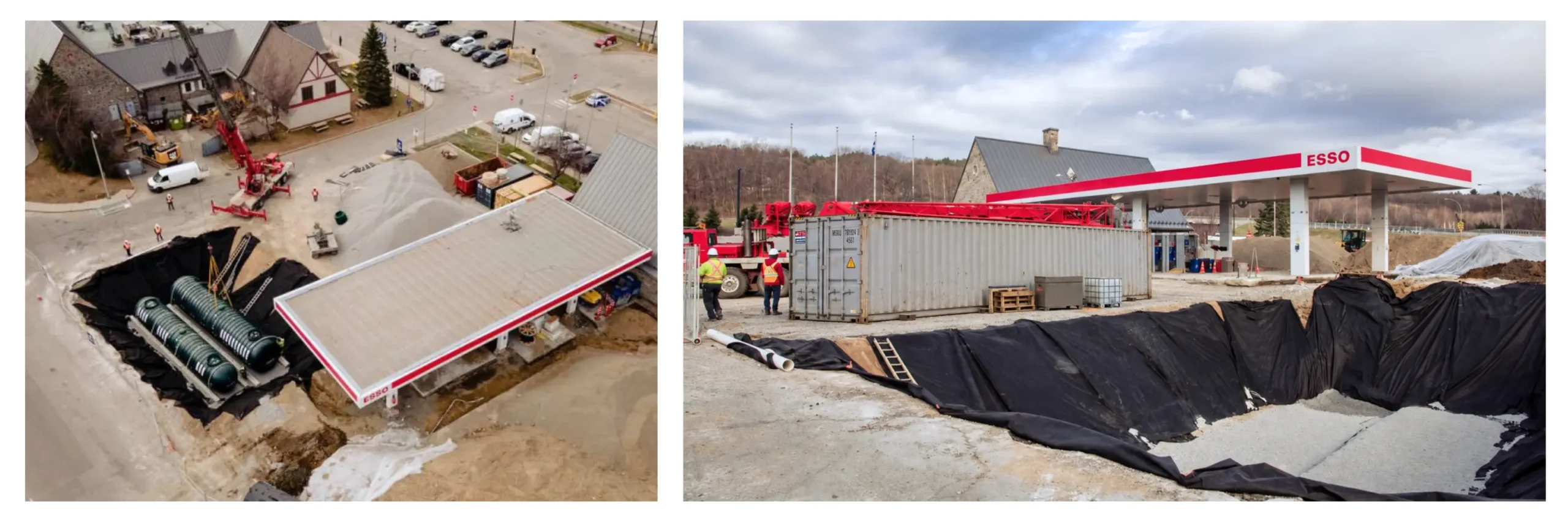
SM Construction regularly completes specialized work in the service station sector, including the replacement and upgrading of tanks, piping, islands, and other related infrastructure. On many of these job sites, teams use shipping containers as secure storage spaces to keep tools, materials, and selected equipment close to the work crews throughout the project.
Why Does Container Prefabrication Simplify Far North Logistics?
Some destinations depend on seasonal marine transportation. A missing component can therefore create a much larger problem than it would on an urban job site located only a few kilometres from a supplier.
Groupe SM Tardif relies on a southern consolidation strategy. Teams assemble, inspect, test, and prepare the systems before shipment. They can then seal the units before transporting them by truck or sealift.
The container then serves two purposes. It protects the finished installation, and it also protects the components throughout the entire logistics chain.
Its Corten steel structure withstands the repeated handling associated with road and marine transportation.
Once on site, containers can also serve as secure mobile storage units that protect tools, parts, and equipment from weather and theft.
A Solution That Also Supports Camp Logistics
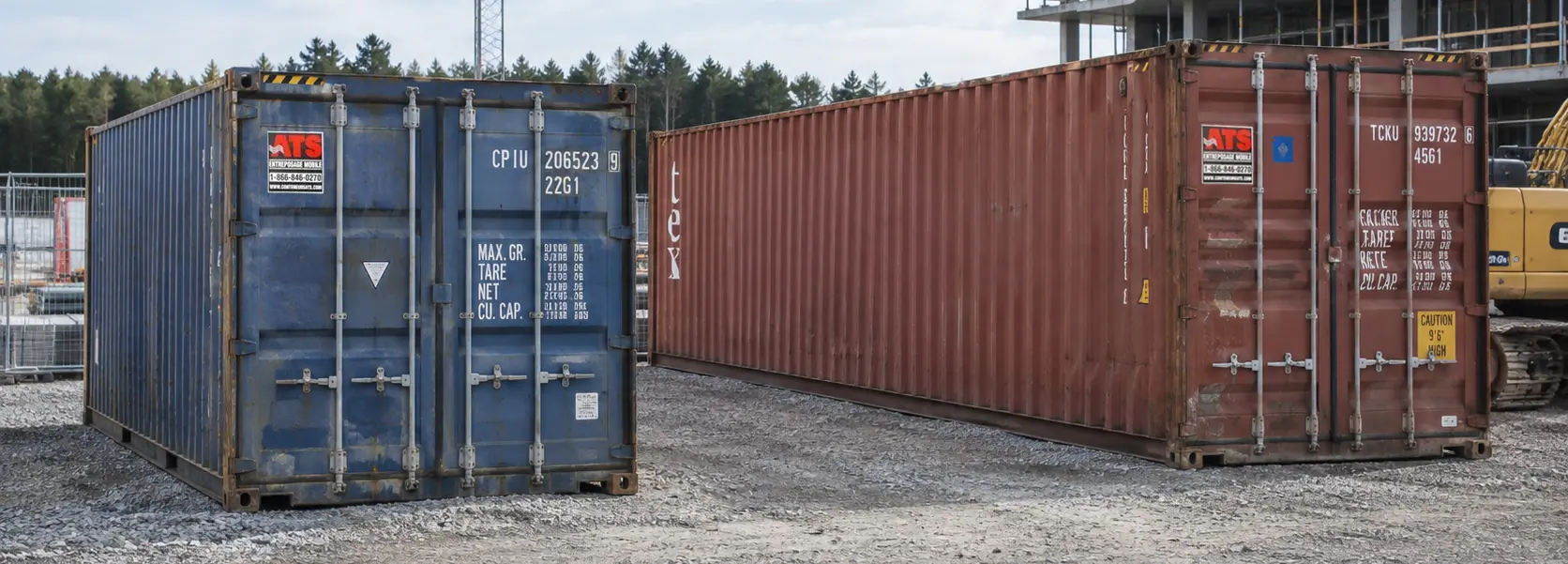
For remote projects, Groupe SM Tardif also uses different types of units to support day-to-day operations.
Depending on the requirements, the logistics setup can include dry containers, refrigerated units, and potable water and wastewater storage systems with capacities of up to 6,000 gallons.
Teams can therefore group several essential functions within the same modular transportation strategy.
At the end of a project, containers also support reverse logistics. They allow teams to ship equipment, materials, and waste back south instead of leaving them on site.
This approach supports recovery and responsible material management objectives in remote regions.
What Container Sizes Does Groupe SM Tardif Use?
Groupe SM Tardif mainly uses 20 ft and 40 ft containers, with a preference for High Cube models when equipment requires additional interior height.
The final choice depends on the space required for mechanical systems, electrical panels, process equipment, maintenance clearances, and other project components.
For an industrial integrator, this standardization also simplifies planning for dimensions, transportation, and handling.
Why Does Groupe SM Tardif Choose ATS Containers?
To complete projects of this scale, Groupe SM Tardif needs quick access to the required units.
The group chooses ATS Containers for our competitive pricing, large inventory, and ability to respond quickly to volume requirements.
This availability becomes especially important when a prefabrication schedule depends on the arrival of several containers with specific dimensions and characteristics.
ATS Containers supplies the shipping container structure. Groupe SM Tardif’s specialized teams then take over to design, modify, and integrate the systems required for each application.
This collaboration demonstrates the full value of a shipping container when specialists integrate it into a broader construction and prefabrication strategy.
What Can You Build from a Shipping Container?
Groupe SM Tardif’s projects provide a clear answer: the possibilities extend far beyond storage.
A 10ft, 20 ft or 40 ft container can become an electrical room, pumping station, fuel management unit, BESS module, training facility, press box, mechanical room, mobile office or industrial equipment shelter.
The project determines the required modifications.
For mining, energy, industrial, institutional, and construction companies, a containerized structure provides a durable platform that supports prefabrication, transportation, and deployment on site.
Planning an Industrial or Modular Project?
ATS Containers supplies shipping containers in a range of sizes for companies developing technical installations, modular buildings, energy infrastructure, or job site solutions.
Contact our team to discuss dimensions, volume requirements, availability, and the logistics needs of your next project.
